Mechanimix
Virtual Showroom Contact

Polymerization Reactor Systems

Integrated batch and continuous polymerization solutions for PVC, polyester, epoxy and acrylic polymers, combining a jacketed reactor, high-viscosity impeller and vacuum system.

50 m³
Reactor Capacity
150 bar
Pressure Rating
100,000+ cP
Viscosity Capability
300°C
Temperature Range
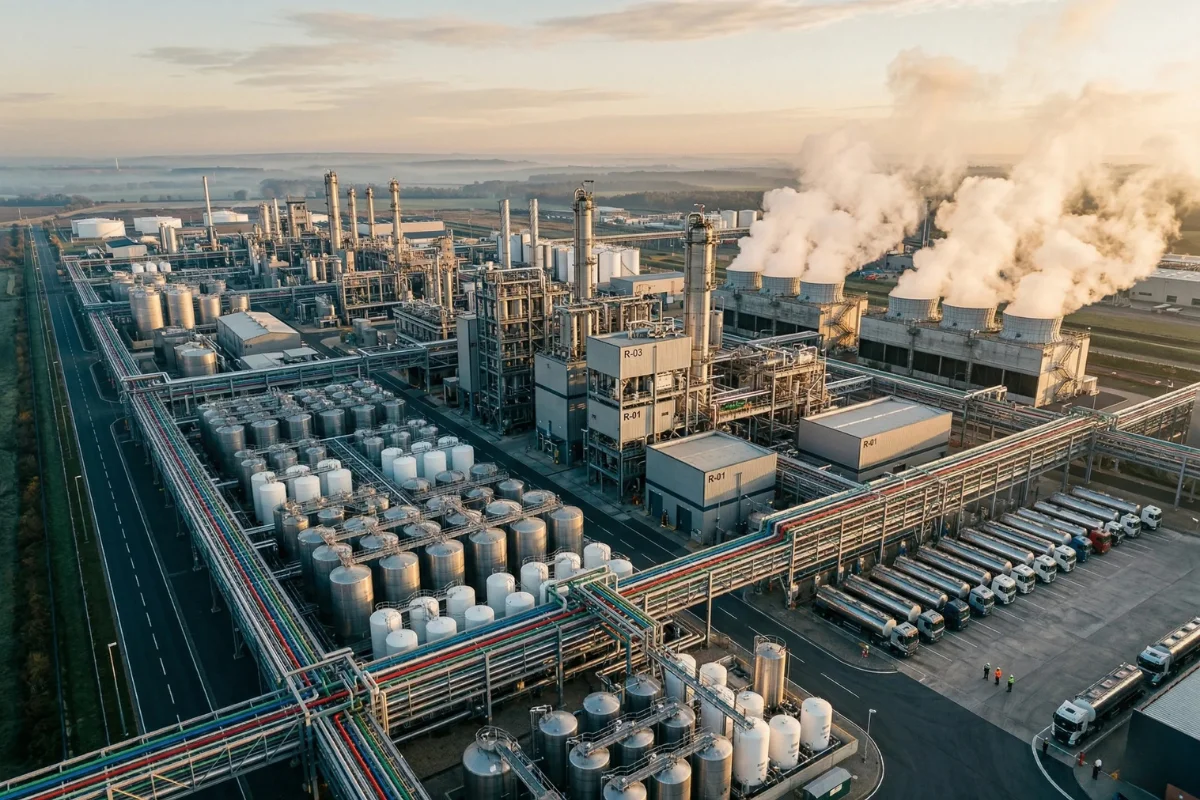
Polymerization reactor system — jacketed tank and HVM impeller
GENEL BAKIŞ

Mechanimix Approach to Polymerization Reactors

Polymerization is an exothermic, highly temperature-sensitive process in which viscosity rises from 10 cP to 100,000+ cP as the reaction proceeds. Mechanimix reactor systems keep the reaction stable from start to finish with jacketed heat transfer, viscosity-matched impellers, vacuum control and integrated DCS. The solution is available in batch, semi-batch and continuous modes.

Double-Wall Heat Transfer

Spiral-baffled jacket and optional internal coil deliver ±1°C stability during exothermic reactions.

Viscosity-Specific Impeller

HVM helical/anchor-type impeller ensures homogeneous mixing even across high-viscosity ranges.

Vacuum & Devolatilization

Vacuum down to 50 mbar is integrated for residual monomer and solvent removal.

DCS-Integrated Control

Temperature, pressure, torque and dosing profiles are managed via recipe-based PLC/DCS.

ATEX-Compliant Design

Optional Zone 1/2 motor, seal and auxiliaries for solvent-based systems.

CFD-Validated

Mixing time, torque and temperature distribution are validated by CFD for every reactor.

SİSTEM BİLEŞENLERİ

System Components

Main Mechanimix equipment and integration items used in the polymerization line.

RC-M

RC-M Jacketed Reactor

Medium-pressure jacketed polymerization reactor, 0.5–30 m³.

Detaylı İncele
HPR

HPR High-Pressure Reactor

Pressurized polymerization and autoclave applications up to 150 bar.

Detaylı İncele
HVM

HVM High-Viscosity Impeller

Helical/anchor type, homogeneous mixing at 100,000+ cP viscosity.

Detaylı İncele

Mechanical Seal

Double, barrier-fluid, ATEX-compliant mechanical seal options.

Jacketed Heating/Cooling System

TCU with ±1°C control and precise tracking of heating and cooling ramps.

Vacuum & Gas Distribution Unit

Devolatilization, nitrogen blanket and monomer recovery line.

UYGULAMA ALANLARI

Uygulama Alanları

PVC Production

Jacketed reactor + HVM combination for suspension and emulsion PVC reactions.

Polyester Resin

Esterification and polycondensation reactors for unsaturated polyester resin production.

Epoxy Resins

Bisphenol-A / ECH reaction with high viscosity and precise temperature control.

Acrylic Polymers

Solvent and emulsion-based acrylic polymerization with ATEX-compliant equipment.

Silicone Polymers

Anchor-type HVM impeller for high-viscosity silicone production.

TEKNİK ÖZELLİKLER

Teknik Özellikler

ÖzellikDeğer
Capacity Range0,5 – 50 m³
Design PressureFull vacuum – 150 bar
Design Temperature−20 … +300 °C
MaterialAISI 316L / Duplex / Hastelloy C-276
Viscosity Range1 – 100.000+ cP
ImpellerHVM helical / anchor / combined
Temperature Accuracy±1 °C (with TCU)
StandardsPED 2014/68/EU, ASME VIII Div.1, ATEX
NEDEN MECHANIMIX

Why Mechanimix?

Viscosity Profile Engineering

The viscosity profile evolving during the reaction is modelled with CFD, and the impeller and motor are selected accordingly.

Single-Source Responsibility

Reactor, impeller, seal, TCU and control all come from a single source — zero interface issues.

Pilot-to-Production Scale-Up

We safely scale your lab recipe from a 50 L pilot reactor up to a 50 m³ production reactor.

Field Service

Commissioning, operator training and 24/7 technical support included.

SIKÇA SORULAN SORULAR

Sıkça Sorulan Sorular

What is the main difference between batch and continuous polymerization reactors?+
In a batch reactor the recipe is loaded at once, the reaction runs to completion and the product is discharged; product quality consistency within a batch is high, but scale and cycle time are limited. In continuous reactors (CSTR or plug-flow) feeding and product withdrawal happen simultaneously — efficient for high tonnage, but quality varies during start-up and shutdown. Specialty polymers and resins are typically produced in batch, while commodity polymers such as PVC and PET favor continuous operation.
What is the advantage of the HVM high-viscosity impeller?+
In polymerization, viscosity can increase more than 1,000-fold during the reaction, and classical turbine impellers tend to form a rotating 'cavity' only around the shaft at high viscosity. The HVM helical/anchor impeller operates close to the wall, preserving heat transfer from the jacket surface and ensuring homogeneity even at 100,000+ cP. This prevents hot spots and local gelation.
How is temperature precision achieved in a jacketed reactor?+
Spiral-baffle or half-pipe jackets increase heat transfer area and turbulence, while a Temperature Control Unit (TCU) drives jacket inlet temperature with PID control. For large exothermic reactions an internal coil doubles the heat transfer area. With the right combination, ±1°C stability is routinely achieved.
Which safety measures are critical in polymer reactors?+
Due to the risk of runaway reactions, a high-high temperature SIL-2 interlock, a rupture disc + safety valve combination, nitrogen blanket and an emergency quench line are standard. ATEX Zone 1 motors and seals are mandatory in solvent-based systems. Torque monitoring also provides early detection of impeller seizure.
How is the viscosity change during the reaction managed?+
During design, a reaction kinetic model is used to derive the viscosity–time curve and the motor torque is sized for the highest viscosity point (typically with 30% margin). A variable frequency drive (VFD) enables high-speed operation at low viscosity and low-speed/high-torque operation at high viscosity. This saves energy while protecting the shaft and coupling.

Projeniz İçin Ücretsiz CFD Analizi

Proses ihtiyaçlarınıza en uygun sistem konfigürasyonu için mühendislik ekibimizle görüşün. İlk değerlendirme ve ön fizibilite ücretsizdir.

Teklif Alın