Mechanimix
Virtual Showroom Contact

Petroleum Storage & Blending

ATEX-certified side-entry mixing systems for sludge prevention, homogenization and blending in large-scale crude oil, fuel oil and biodiesel storage tanks. Engineering referenced by JANAF Plc.

100,000 m³
Tank Volume
API 682
Seal Standard
ATEX Zone 1/2
Certified
500 kW
Motor Power
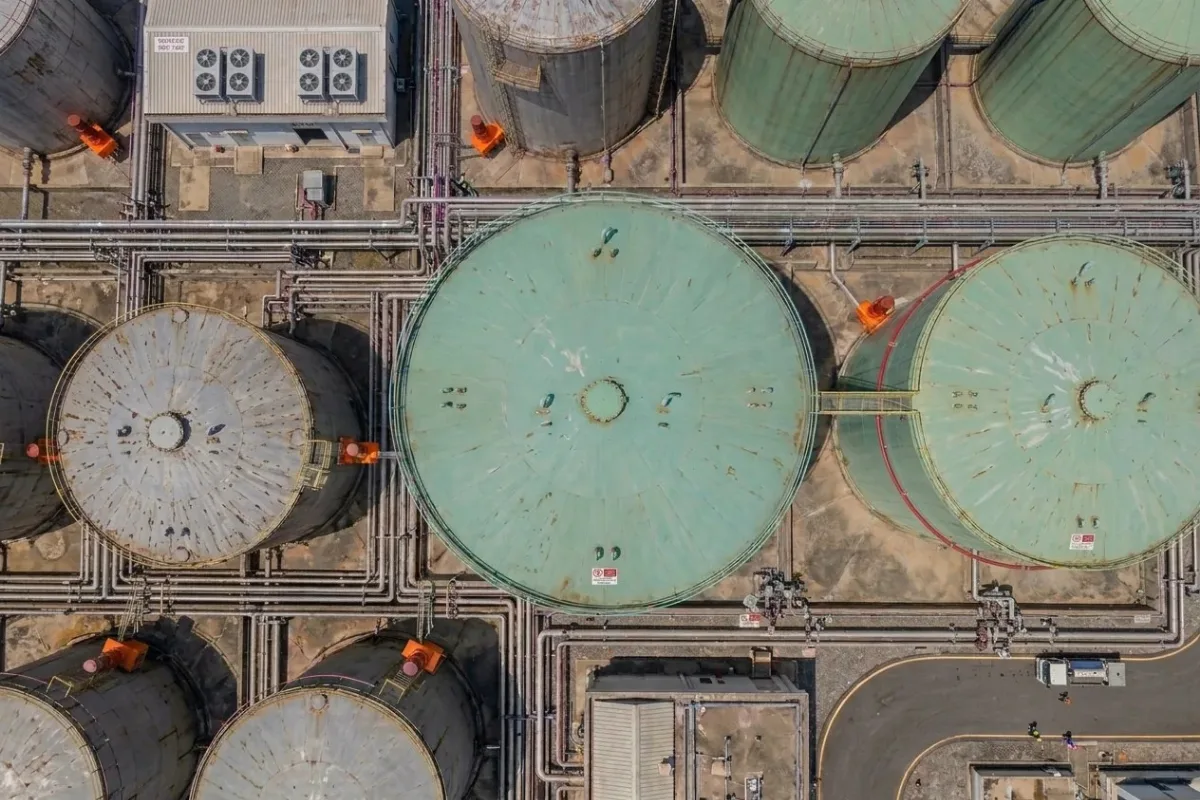
Petroleum terminal storage tanks
GENEL BAKIŞ

About Petroleum Storage & Blending Systems

In large petroleum storage tanks, long-term holding of crude oil generates bottom sludge (BS&W — Bottom Sediment and Water); paraffin, asphaltene and water phases settle and can plug pipelines. Side-entry mixers — mounted near the tank floor with low-speed axial-flow impellers — prevent this settling and homogenize the product. Mechanimix delivers end-to-end engineering with references such as the JANAF Plc Omišalj terminal: ATEX-certified motors, API 682 seals and long-shaft designs ensure reliable operation in tanks up to 100,000 m³.

ATEX Zone 1/2 Compliance

Motors, gearboxes and electrical panels certified for Zone 1 or Zone 2; safe operation in hydrocarbon atmospheres.

API 682-Compliant Seals

Double cartridge mechanical seals with Plan 52/53A/53B barrier fluid loops targeting zero emissions.

Low-Speed Axial Flow

HM axial-flow impellers at 200–400 rpm create a sweep current across the tank floor that prevents settling.

Large-Tank Engineering

2–4 mixers arranged angularly on floating- and fixed-roof tanks; CFD dead-zone analysis.

Blending Process Control

Component ratios monitored online with a blend analyzer; blend recipes managed through SCADA.

Remote Monitoring

Vibration, bearing temperature and seal pressure streamed over IoT for continuous monitoring; predictive maintenance reporting.

SİSTEM BİLEŞENLERİ

System Components

This system consists of integrated components selected from MechaniMix's product portfolio.

UYGULAMA ALANLARI

Uygulama Alanları

Crude Oil Storage

Preventing BS&W settling at refineries and pipeline terminals; operations similar to JANAF Omišalj.

Fuel Oil Blending

Blending products of varying viscosity and sulfur content to specification; IMO 2020 compliance.

Biodiesel / Biofuel

Homogenization of FAME and diesel blends; preserving low-temperature flow properties.

LPG Terminal

Preventing temperature stratification and rollover in liquefied petroleum gas storage tanks.

TEKNİK ÖZELLİKLER

Teknik Özellikler

ÖzellikDeğer
Tank Volume5,000 – 100,000 m³
Motor Power30 – 500 kW
Speed200 – 400 rpm (low speed)
Impeller MaterialCarbon steel / AISI 316L / Duplex
SealAPI 682 Plan 52 / 53A / 53B (double cartridge)
Motor CertificationATEX Zone 1 or Zone 2, II 2G Ex db IIB T3
Units per Tank1 – 4 (based on tank diameter)
Remote MonitoringVibration + temperature + seal pressure IoT
NEDEN MECHANIMIX

Why Mechanimix?

Petroleum Terminal References

Engineering applied at JANAF Plc Omišalj and Turkish refinery/terminal projects; field-validated design.

Unified ATEX + API Compliance

Mechanimix supplies full ATEX and API 682 documentation for motor, gearbox, seal and control panel from a single source.

High MTBF

Low speed plus robust bearing design delivers 50,000+ hours MTBF; tested in harsh and hot climates.

CFD Blend Simulation

In-tank flow and blend time modeled with CFD; mixer count, angle and position optimized.

SIKÇA SORULAN SORULAR

Sıkça Sorulan Sorular

What is the advantage of a side-entry mixer over a top-entry mixer?+
In large-diameter storage tanks (typically 30–100 m diameter), the shaft length required by a top-entry mixer is uneconomical and the tank roof must be reinforced against static load. A side-entry mixer delivers shorter shafts, lower motor power and a direct sweep current at the tank floor — reducing both CAPEX and OPEX.
Which API 682 seal category fits which service?+
Category 1 targets general industrial service, Category 2 is standard for refinery and petrochemical applications, and Category 3 is recommended for critical service (high pressure, high temperature, hazardous fluids). Petroleum storage/blending typically uses Category 2 with Plan 52 or 53A; barrier fluid pressure is maintained above tank pressure to prevent leakage.
What is the difference between ATEX Zone 1 and Zone 2?+
Zone 1: explosive atmosphere is occasionally present during normal operation (vicinity of a crude-oil tank). Zone 2: explosive atmosphere is not expected during normal operation and, if it occurs, only for a short duration (wider terminal area). Equipment must be marked II 2G for Zone 1 and II 3G for Zone 2.
How is a tank's anti-settling strategy built?+
Tank geometry and product properties (viscosity, BS&W ratio, temperature) are analyzed first; then CFD targets the minimum sweep velocity (typically 0.3–0.5 m/s at floor level) to set mixer count and angle. On tanks above 60 m diameter, 3–4 mixers are distributed at equal angular spacing around the circumference.
How is blending time optimized?+
Blend time depends on tank volume, mixer torque/flow and the density/viscosity difference between products. CFD simulation targets 95% homogeneity time (t95); typically, a 100,000 m³ tank with two 250 kW side-entry mixers achieves a 6–10 h blend. Operation time is tracked in real time with an online blend analyzer.

Projeniz İçin Ücretsiz CFD Analizi

Proses ihtiyaçlarınıza en uygun sistem konfigürasyonu için mühendislik ekibimizle görüşün. İlk değerlendirme ve ön fizibilite ücretsizdir.

Teklif Alın