Mechanimix
Virtual Showroom Contact

FGD / Desulfurization Systems

Limestone slurry preparation, absorber mixing and gypsum crystallization systems for flue gas desulfurization. Combined abrasion and corrosion resistance with 24/7 continuous operation.

200 kW
Motor Power
30%
Solids Concentration
24/7
Continuous Operation
ISO 14001
Environmental Compliance
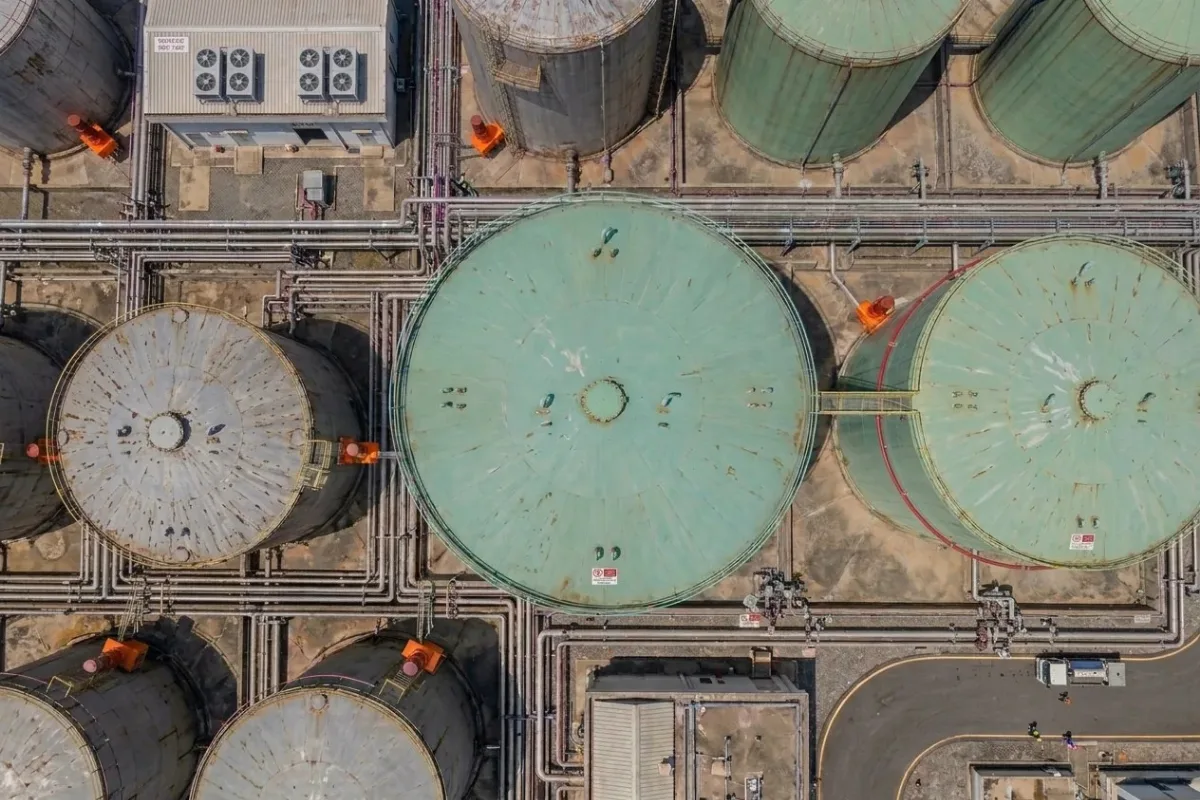
Flue gas desulfurization unit at a thermal power plant
GENEL BAKIŞ

About FGD / Desulfurization Systems

Flue Gas Desulfurization (FGD) is a wet scrubbing process used to capture SO₂ from the flue gas of coal-fired thermal power plants, cement plants and smelters. Limestone slurry contacts the flue gas in the absorber tower to form CaSO₃/CaSO₄, which is then crystallized as gypsum. Mechanimix designs the mixing systems needed in all three key tanks — slurry preparation, absorber and gypsum — end to end.

Combined Abrasion + Corrosion Resistance

Super Duplex or Cr₂₇ impellers with rubber-lined tanks to withstand the combination of low pH, high solids content and chloride ions.

HWM-B Wide-Blade Impeller

Guarantees solids suspension with low power consumption in high-viscosity, dense-slurry environments.

Continuous-Duty Design

Bearings, seals and gearboxes specified for MTBF > 40,000 hours to support 24/7 operation without redundancy.

Limestone Dosing Control

pH feedback closed-loop dosing stabilizes SO₂ capture efficiency at 95%+.

Gypsum Crystallization Management

Controlled supersaturation and residence time produce marketable-grade gypsum (CaSO₄·2H₂O > 95%).

Low Energy Consumption

Tank geometry and baffle configuration optimized with CFD; kW/m³ below industry average.

SİSTEM BİLEŞENLERİ

System Components

This system consists of integrated components selected from MechaniMix's product portfolio.

UYGULAMA ALANLARI

Uygulama Alanları

Coal-Fired Power Plants

SO₂ capture from flue gas in 500–1,200 MW units; compliance with European and Turkish emission regulations.

Cement Plants

SO₂ reduction from clinker kiln flue gases; compliance with CemBureau criteria.

Metal Smelters

Scrubbing of SO₂-rich gases in copper, zinc and lead smelters.

Gypsum Recovery

Producing FGD gypsum at marketable grade for the cement and drywall sectors.

TEKNİK ÖZELLİKLER

Teknik Özellikler

ÖzellikDeğer
Tank Capacity50 – 2,000 m³
Motor Power30 – 200 kW
Solids Concentration15% – 30% (by weight)
MaterialSuper Duplex / Cr₂₇ impeller + rubber-lined tank
Operating pH4.5 – 6.5 (absorber), 8–10 (limestone)
Temperature45 – 65 °C
MTBF Target> 40,000 hours (continuous operation)
Emission ComplianceIED / MCP Directive, ISO 14001
NEDEN MECHANIMIX

Why Mechanimix?

Power + Cement Sector References

Slurry mixing experience in thermal power plants and cement works; uninterrupted availability of critical equipment.

Combined Wear-Corrosion Design

FGD service is both abrasive and corrosive; Mechanimix provides a material recipe that addresses both mechanisms together.

Low OPEX Guarantee

Optimized impeller design reduces energy consumption; committed spare-parts stock makes planned maintenance predictable.

24/7 Operational Assurance

Fast on-site response and in-stock seals and impellers keep annual downtime below 8 hours.

SIKÇA SORULAN SORULAR

Sıkça Sorulan Sorular

Why is mixing critical in an FGD process?+
In the absorber tank, keeping limestone particles suspended directly drives SO₂ absorption efficiency — if particles settle, the reactive surface area drops and capture rate falls. Homogeneous mixing also controls gypsum crystal size, securing marketable byproduct quality.
Why is the HWM-B impeller recommended?+
FGD absorber tanks can reach 30% solids with elevated viscosity, where a standard HWM impeller becomes insufficient. The wide-blade geometry of the HWM-B generates higher flow and achieves the just-suspended condition at lower speed, cutting energy consumption.
How is the slurry tank sized?+
Hourly limestone consumption is calculated from flue gas flow and SO₂ concentration. Typical residence times are 4–6 h for the absorber, 2–3 h for slurry preparation and 2 h for the gypsum tank. Tank H/D ratio is kept between 1.0 and 1.3.
How are abrasion and corrosion managed simultaneously?+
Cr₂₇ high-chromium iron is excellent against abrasion but limited in corrosion resistance; Super Duplex is strong against corrosion but not as abrasion-resistant as Cr₂₇. In FGD, impeller blades get Cr₂₇ or polyurethane coating, the hub uses Super Duplex, and the tank is protected by a rubber liner.
How is gypsum crystallization controlled?+
Supersaturation level, residence time and mixing intensity are controlled to target a typical crystal size of 40–60 µm. Over-agitation breaks crystals while under-agitation yields coarse, irregular ones; CFD is used to determine the optimum tip speed.

Projeniz İçin Ücretsiz CFD Analizi

Proses ihtiyaçlarınıza en uygun sistem konfigürasyonu için mühendislik ekibimizle görüşün. İlk değerlendirme ve ön fizibilite ücretsizdir.

Teklif Alın