Mechanimix
Virtual Showroom Contact

Leaching & Extraction Systems

End-to-end mixing and extraction systems for gold CIL/CIP lines, copper-nickel acid leaching and HPAL autoclave processes. Optimized solid-liquid mass transfer and chemically resistant design.

12 Tanks
In-Series Banks
Cr₂₇
Impeller Material
Hastelloy
Acid-Resistant (optional)
150 bar
HPAL Pressure
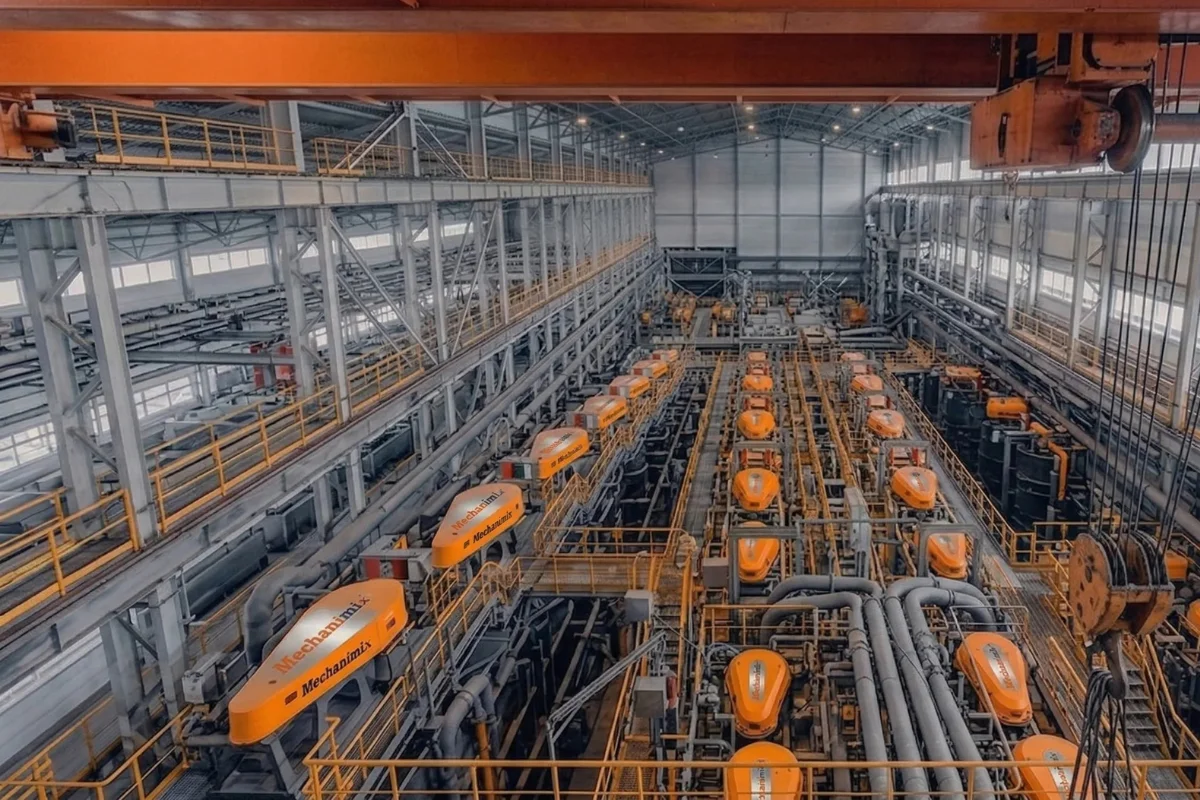
CIL tank line in a gold leaching plant
GENEL BAKIŞ

About Leaching & Extraction Systems

Success in hydrometallurgical processes depends on solid-liquid contact time, uniform reagent distribution and equipment selected for abrasive/corrosive service. Mechanimix leaching systems cover a broad range — from CIL/CIP gold lines to acid-leach copper-nickel tanks and high-pressure HPAL autoclaves. Tank, impeller, shaft, seal, dosing and aeration components are selected to match the process chemistry.

Mass Transfer Optimization

Gas-liquid (O₂ holdup) and solid-liquid kinetics are optimized via impeller type and speed selection; cyanide/acid consumption is reduced.

Chemically Resistant Materials

AISI 316L, Duplex 2205, Super Duplex, Hastelloy C276 and rubber liner options to suit every process environment.

Tank Train Engineering

Hydraulic balance, overflow and level control of 6, 8, 10 or 12-tank CIL/CIP lines are engineered as a whole.

HPAL Autoclave Expertise

Purpose-built shaft-seal solutions for high-pressure acid-leach autoclaves operating at 150 bar / 270 °C.

Aeration + O₂ Injection

Sparge/draft tube configurations for gold CIL lines; oxygen solubility modeled with CFD.

CFD and Pilot Scale-Up

Lab/pilot data is scaled to industrial size through CFD; dead-zone and short-circuit risks are eliminated up front.

SİSTEM BİLEŞENLERİ

System Components

This system consists of integrated components selected from MechaniMix's product portfolio.

UYGULAMA ALANLARI

Uygulama Alanları

CIL / CIP Gold Leaching

Gold recovery concurrent with activated carbon adsorption; 24–48 h contact time across tank trains.

Acid Leaching (Copper-Nickel)

Metal dissolution with sulfuric or hydrochloric acid; corrosion-resistant material selection is critical.

HPAL (High Pressure Acid Leach)

Autoclave leaching of nickel laterite ores at 150 bar and 270 °C; dedicated shaft and seal solutions.

Heap Leach Conditioning

Pregnant solution conditioning prior to heap leaching and agitation in extraction tanks.

TEKNİK ÖZELLİKLER

Teknik Özellikler

ÖzellikDeğer
Tank Capacity20 – 1,500 m³
MaterialAISI 316L / Duplex 2205 / Super Duplex / Hastelloy C276
Impeller TypeHWM (solids suspension) / TVM (gas-liquid)
Motor Power15 – 315 kW
SealAPI 682 Plan 53B / 54 double cartridge
Operating TemperatureAmbient – 270 °C (HPAL)
Operating PressureAtmospheric – 150 bar (HPAL)
In-Series Banks6 – 12 tanks (CIL/CIP)
NEDEN MECHANIMIX

Why Mechanimix?

Hydrometallurgy Experience

Reference-proven engineering for gold, copper, nickel and cobalt leaching plants; process-equipment integration from a single source.

Material Selection Advisory

Stainless, duplex, Hastelloy or rubber liner selection matched to process chemistry; optional corrosion coupon testing.

CFD + Scale-Up Data

Lab or pilot data scaled to industrial size with CFD; kinetics and hydrodynamics evaluated together.

Long-Life Seals

API 682 double cartridge solutions engineered for 3+ years of service in abrasive slurry and corrosive environments.

SIKÇA SORULAN SORULAR

Sıkça Sorulan Sorular

What is the key difference between CIL and CIP?+
In CIP (Carbon-in-Pulp), ore is first leached in dedicated tanks and activated carbon adsorption is then performed in separate tanks. CIL (Carbon-in-Leach) runs leaching and carbon adsorption simultaneously in the same tank — reducing contact time and CAPEX, but making mixing and aeration design far more critical.
Why do HPAL autoclaves require specialized mixer design?+
HPAL autoclaves operate in sulfuric acid at 150 bar and 250–270 °C. Shaft sealing requires a dedicated Plan 53B double cartridge seal, and impellers must be titanium or Hastelloy. Shaft length is determined with thermal-expansion calculations against the vapor environment.
Which material should be selected for acid leaching?+
If sulfuric acid plus chlorides are present, use Super Duplex or Hastelloy C276. For sulfuric-only service, 904L or Duplex 2205. For hydrochloric acid, Hastelloy B/C or rubber liner is preferred. Corrosion-coupon testing is recommended for final selection.
How are CIL tank trains sized?+
Sizing is based on total leach time (typically 24 h for Au), ore feed rate and target gold recovery. 6–8 tanks is a classic configuration; individual tank volume equals total time divided by the number of tanks, followed by a hydraulic check for carbon concentration and flow balance.
How is mass transfer optimized?+
For solid-liquid systems, the target is the minimum speed exceeding the just-suspended criterion; for gas-liquid, a kLa (volumetric mass transfer coefficient) target is set. HWM impellers keep solids in suspension at low power/volume, while TVM impellers boost oxygen solubility — this dual combination is common in CIL tanks.

Projeniz İçin Ücretsiz CFD Analizi

Proses ihtiyaçlarınıza en uygun sistem konfigürasyonu için mühendislik ekibimizle görüşün. İlk değerlendirme ve ön fizibilite ücretsizdir.

Teklif Alın